Study Abroad
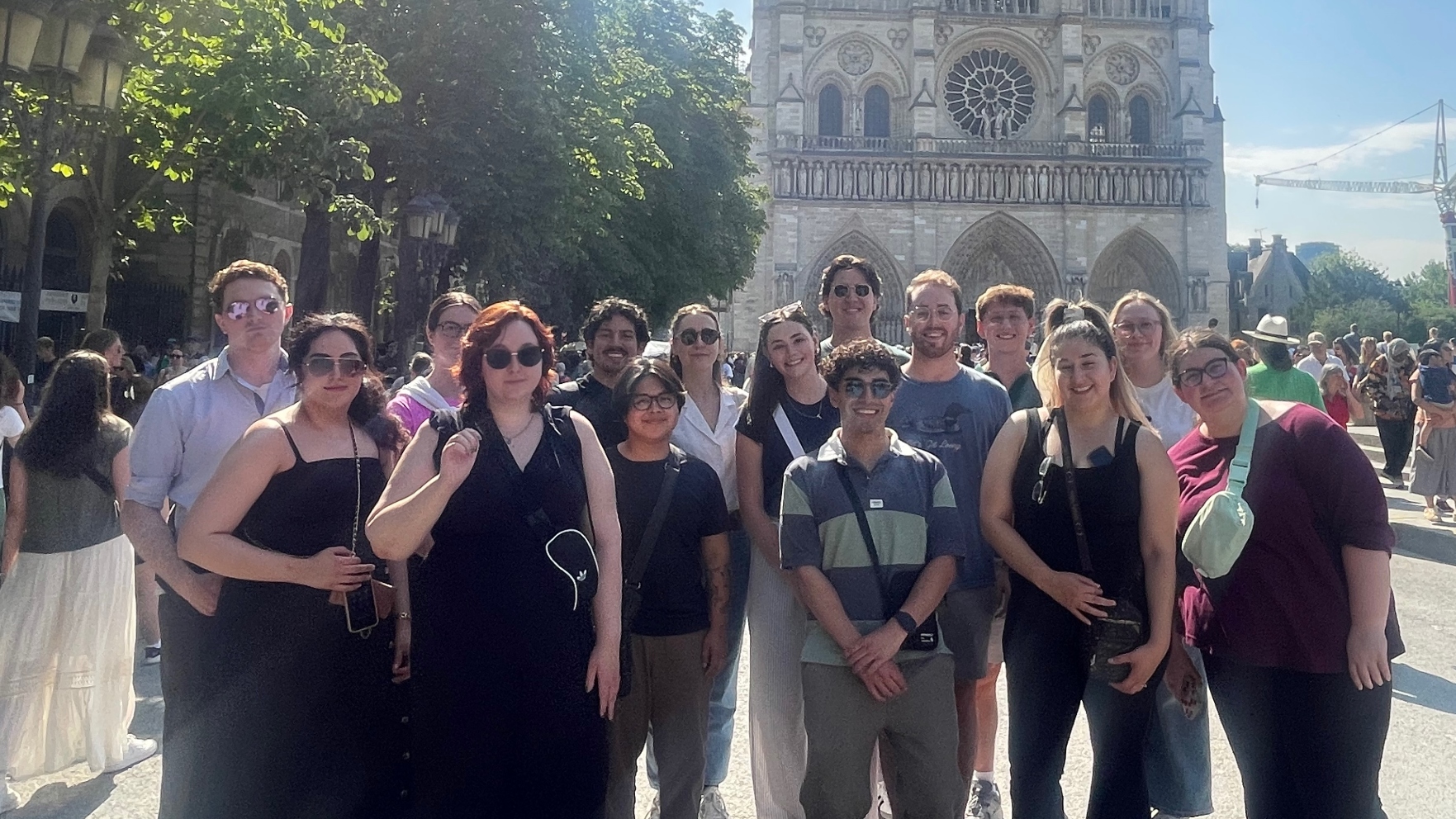
Drake Law students have opportunities to expand their classroom knowledge abroad in France.


About Nantes
Nantes is located just 35 miles from France’s Atlantic coast. The 6th largest city in France, with one of the youngest demographics, Nantes is a major commercial center with a port on the Loire River. It was rated as one of the best cities in France for quality of life.
A tapestry of vineyards surrounds Nantes, and many elegant chateaux are nearby and open to the public. Paris is two hours away by train, seaside resorts are a half hour away, and all of Europe is easily accessible by train or plane. A medieval castle, historic sites, outdoor cafes, and a lively nightlife offer students a unique international experience.
Application Info
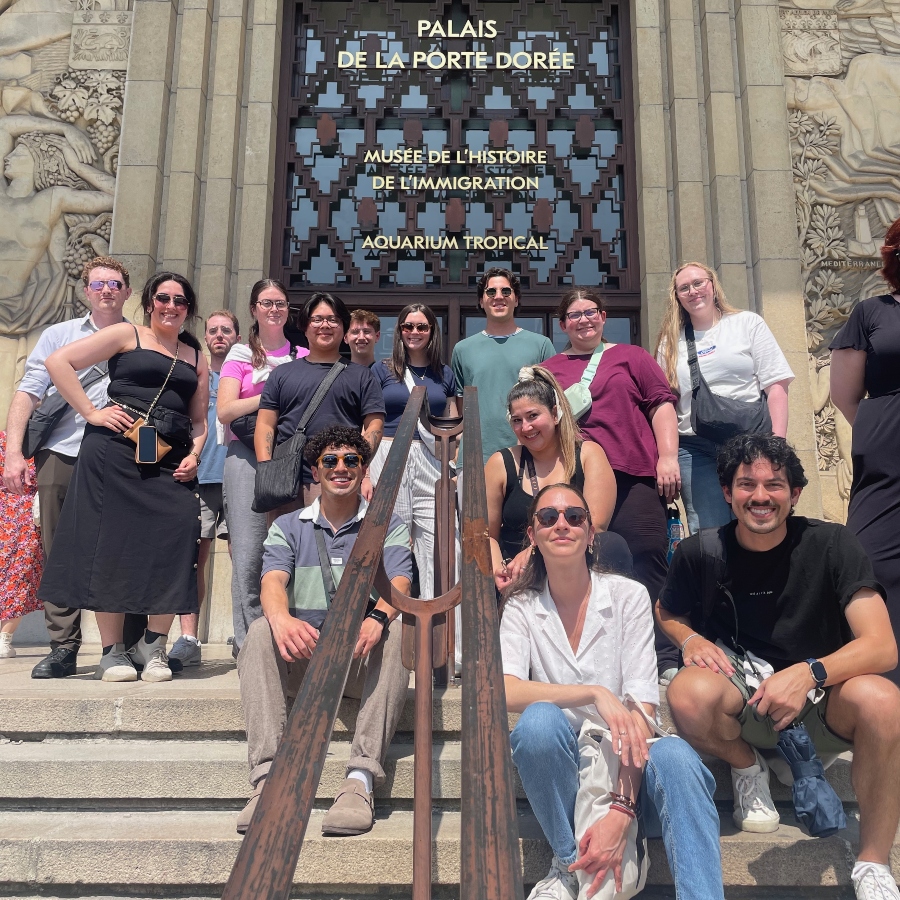
The Summer in France program is limited to 20 students. Any student in good standing attending an ABA-accredited law school who has completed one year of full- or part-time law study is eligible to enroll.
To be accepted into the Summer in France program, a student must have a cumulative grade point average of at least 2.25 at the time of registration.
There are no prerequisites for any of the courses in this program. Qualified students will be admitted on a first-come, first-served basis.
Frequently Asked Questions
This FAQ page is designed to help Summer in France students plan for the trip. Students will also meet several times with the program director to learn more details and ask any additional questions before the trip.
Students can expect round-trip travel from Des Moines to Nantes to range between $1400 and $2,000. Students have often found airfare for less by booking early or flying out of Omaha, Kansas City, or a different location other than Des Moines.
Students may fly to Paris and take the train to Nantes or fly directly to Nantes. Often, the earlier one makes a reservation, the lower the airfare.
The International Student Travel Agency (ISTA) and other discount packagers often have lower prices. Students may want to consider purchasing an International Student Identity card (ISIC) for the program, and then try Student Universe for good fares using the ISIC for student discounts.
You can sometimes find good airline prices at websites such as Kayak, Priceline, Expedia, Sky Scanner, or on sites maintained by each of the airlines. Our students have sometimes found good prices at https://home.byojet.com/. On these sites, you can give your travel dates and destination, and the computer will find the cheapest available fare for you, given a set itinerary.
In past years, some students have had luck bidding on tickets through Priceline. The potential problem with bidding for tickets through priceline.com is that you are not guaranteed a flight time or routing at the time you must commit to pay for the ticket.
A good travel agent can also be a useful resource. Students will need to make their own flight arrangements.
Some students fly directly to Nantes. This will require a connection in Europe. Many students fly to Paris and take a train from Paris to Nantes.
Almost all flights from the U.S. to Paris arrive at Charles de Gaulle (CDG) airport. There is a train station at CDG that has trains departing for Nantes frequently. The train ride on the French TGV is about 3-4 hours. The train station in Nantes is in the center of town.
Train tickets can be purchased at Rail Europe or SNCF prior to arriving in France. If you get tickets more than 14 days in advance, they will likely cost less money; however, these tickets are often non-refundable, which may cause an issue if your plane is late and you have not allowed enough time for the transfer.
You can also buy tickets when you get to France, but in recent years, the trains have been less frequent and often sell out. One-way train fare to Nantes is about $60–$100 for Economy Second Class.
You may choose to arrive in Europe before the start date of the program; however, you will be responsible for your own lodging prior to that date. We can recommend some inexpensive accommodations. Official program dates will be made available closer to the program.
Nantes is a historic city that is visited by many tourists. However, the residents of Nantes are not as jaded about tourists. The residents are interested in what brings people to Nantes. People in Nantes are friendlier than in most cities in the U.S. or France, although one can find rude people in any city, European or American.
Nantes is a university city, so there are a lot of young people around (roughly 40 percent of the population is 26 or younger) and a lot of fun places to check out. Read these articles in The Times, National Geographic, or The Irish Times to learn more about life in Nantes.
Nantes is a safe city. However, like most cities, there are some areas of Nantes that one shouldn't go to at night alone. Visitors are most subject to property crimes, so you need to keep track of your wallet and cell phone.
For additional information about health and safety when traveling abroad, visit travel.state.gov.
Drake provides each student with their own studio apartment located close to public transportation.
The apartment includes a bathroom with a shower; a kitchenette with a two-burner stove, small refrigerator, microwave, sink, dishes, and flatware; a bed; a television; and a desk. Internet access is available.
The city of Nantes has everything from grocery stores and take-out eateries—where one can buy a croissant or baguette sandwich for very little money—to expensive restaurants. Many students choose to purchase food from the grocery store. Each student will have a kitchenette for preparing food.
Students can sample everything from pizza to couscous to crépes and beyond. Of course, Nantes has an abundance of seafood from the Atlantic Ocean and the Loire River.
You can absolutely get by without being fluent in French. However, there is no question that your experience will be considerably enhanced if you try to speak some French.
Drake will offer a series of informal French lessons on common words and phrases to help students learn the language. There are also CDs students can use at the Law Library. We encourage students who don't speak French and do not wish to attend the informal lessons to develop some familiarity with basic French vocabulary. There are many language-learning apps, such as Duolingo or Babbel, that are fun and free.
Once you are there, you may want to communicate with people in Nantes by using the French you've learned. Many people in Nantes speak some English, especially college students, but the efforts you make to speak French will be appreciated.
The bottom line is that concerns about your French language skills should not be a reason to forego this opportunity; however, your time in Nantes will be that much more enjoyable if you try to speak even a modest amount of French.
The Drake Summer in France Program is run in cooperation with Nantes University and the Nantes University Law School.
Classes are held at Nantes University Law School, which provides the program with classroom supplies, classroom technology, and access to computers and the internet. Professor Derek Wilson and Professor Araceli Turmo of the Nantes University Law School serve as assistant on-site directors of the program. They act as liaisons to make sure program needs are met on a timely basis.
Drake Law School has had a long and fruitful relationship with Nantes University. Each year, Drake Law School hosts several Nantes University law students who study for one year at Drake Law School. These students are invited to participate in Summer in France activities with Drake students in Nantes, and they provide social support to the American students. The American students, in turn, help the French students adjust to life in the U.S. when they arrive in Des Moines.
Classes will meet every weekday at Nantes University. For more details, see the Summer in France Draft Schedule. Some changes may be necessary as the summer approaches.
Students will have access to computers at Nantes University. You should also bring a laptop to access class readings and take final exams.
There is an internet connection in each room at the residence. If you choose to bring a laptop, be sure to bring the appropriate power adapter. Do not leave your laptop or other personal items unattended at any time.
Yes. The classes will have at least two required field trips, often including a visit to a local administrative body, and a visit to the criminal courts at the Palais du Justice.
We will arrange a recreational field trip around Nantes during the program such as a winery tour and a chateaux visit. There will also be a lunch celebrate the end of the program.
We encourage the explorer in all of you. Classes are held early on Friday and late on Monday to provide longer weekends for travel.
Paris is a 2-3 hour train ride away. The Loire River Valley chateaux are beautiful, historic, and conveniently located near Nantes. There are also vineyards and wineries in Nantes. If students decide to travel west into Brittany, they will find a completely different culture from the rest of France.
Other European cities are reachable by train, and one can purchase a Eurorail pass to travel by train at a lower cost.
Visit Eurail to find out more information about the multi-country travel pass, which will save you money on your travels. Students in the past have gone to places such as Dublin, London, Amsterdam, Biarritz, and the Normandy beaches, to name a few.
There are no prerequisites for any of the courses offered in the Summer in France program.
However, to participate, all students must demonstrate the following requirements:
- Have completed one year of full- or part-time law study
- Be in good standing at the law school that they attend*
- Meet the grade point requirement
*Non-Drake Law School students must submit a letter to Drake Law School from their dean or registrar certifying their current good standing. Acceptance of credits or grades for any course taken in the program, including externships and other clinical offerings, is subject to determination by the student’s home school.
While we hope that you will all have the chance to travel during the Summer in France program, it is an academic program, and class attendance is important. Courses meet a limited number of times. For this reason, and based on the ABA standards, we have adopted the following attendance policy:
- For two-credit-hour classes: Students with five or more absences will not be permitted to sit for the final exam.
- For one-credit-hour classes: Students with three or more absences will not be permitted to sit for the final exam.
The facility where we hold classes is fully accessible to persons with disabilities. Anyone wishing to attend the program who will need handicap accessible housing facilities or other accommodations should contact the program director.
The accessibility of France and Nantes to individuals with disabilities may vary.
The Drake Summer in France program has been offered since the summer of 2000. The enrollment varies from year to year and generally ranges from 12 to 25 total students. This year, 20 applicants will be accepted.
The weather in Nantes in May and June is uncertain and variable. It can be either sunny and mild with temperatures around 75ºF, or cold and rainy with temperatures around 40ºF. It can also get extremely hot with temperatures around 90ºF.
It's best to prepare for all these conditions. Pack clothing that can be layered.
The 2026 costs are as follows:
Program fee: $8,500
Airfare round trip: $1,400-$2,000
Train round trip to Nantes: $150
Food per day: About $20-$30
Tram around Nantes: $80
Books: $175
Rent in Des Moines: $1180 (for students who need to maintain local housing)
Additional travel expenses will depend on the individual activity. Students may want to explore a variety of train passes.
Identification
Students may want to consider purchasing an International Student Identity Card ($22). If students want to be eligible for student discount rates for purchasing a rail pass or to get into a museum, etc., the ISIC may be a more reliable way to show they are a student than just using a Drake student ID. Learn more information about the benefits of an International Student Identity Card.
Passport
Check to be sure your passport is current.
Note that it can take as long as 2-3 months to obtain a valid passport. Your passport must also be valid for at least six months beyond the dates of your trip. Apply now for your passport, even if you are not certain you will attend the program; it will save you money.
Emergency Travel Assistance
Emergency travel assistance is in place for those who are traveling on Drake-recognized trips. Participants will be provided with a membership card and policy information prior to departing.
All students accepted into the program will receive a handbook with extensive information about what they will need to bring with them to France.
A few items to remember:
- Current program calendar
- Travel planning materials
- Drake University Off-Campus Courses/Programs Handbook
- U.S. State Department Consular Information Sheet
- CDC health information about France
- Seminar Participant Release
- Indemnification Agreement and Statement of Understanding – Seminar Visitor Release, Indemnification Agreement, and Statement of Understanding (If Applicable)
- Emergency Contact/Medical Condition/Health Insurance Form
- A copy of your proof of insurance
- Contact information—List of English-speaking health care resources